This is a 2026 guide to the water and energy issues facing Arizonans and their neighbors across the American Southwest. These are not abstract policy debates. They are decisions being made right now that will determine what your water costs, whether your power stays on, and whether the region your family lives in has the resources to sustain itself for the next generation. I spent nearly 25 years inside the SRP boardroom. This is what I know.
– Keith Woods, KB Woods
1. THE COLORADO RIVER
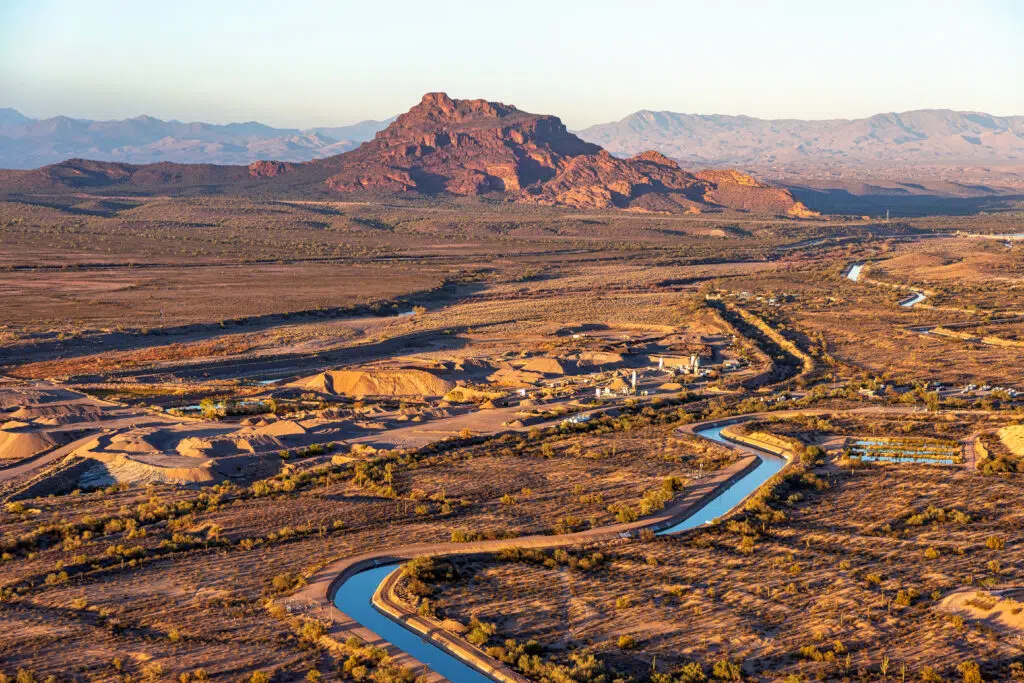
The operating rules for the Colorado River after 2026 will be written with or without Arizona’s input. That is the only sentence that matters right now.
Here is the short version of a long problem. The 1922 Colorado River Compact divided the river between the Upper Basin states of Colorado, Utah, Wyoming, and New Mexico, and the Lower Basin states of Arizona, California, and Nevada. Each basin received 7.5 million acre-feet annually. Mexico received an additional 1.5 million acre-feet under a 1944 treaty. That adds up to 16.5 million acre-feet of paper promises built on flow measurements taken during one of the wettest periods in recorded history.
The river does not produce that much water. It never reliably did. A USGS hydrologist named E.C. LaRue told the 1922 negotiators exactly that. They chose to ignore him because the math was politically inconvenient.
Tree ring studies now confirm the river’s long-term average sits closer to 13 to 14 million acre-feet. Since 2000 it has averaged about 12.4 million. That is a structural deficit of roughly 4 million acre-feet every year. Water that was promised but does not exist.
Lake Mead dropped below 1,000 feet of elevation in 2022 for the first time since Hoover Dam was filled. Lake Powell fell within striking distance of dead pool. The federal government declared the first-ever official shortage on the river that same year. Arizona took mandatory cuts. California did not.
That asymmetry is not an accident. It is written into law. Arizona’s Central Arizona Project allocation of 2.8 million acre-feet is junior to California’s 4.4 million acre-feet in the priority structure. When Mead drops, Arizona absorbs the cuts first. Arizona has now taken more than 800,000 acre-feet in cumulative reductions since 2021.
The Bureau of Reclamation released a draft Environmental Impact Statement in January 2026 evaluating how the system should be managed after the current interim guidelines expire. The seven basin states failed to reach an agreement before the February 2026 deadline. The federal government may now act unilaterally. Whatever rules emerge will govern water deliveries to 40 million people for the next generation.
The question for Arizona is whether it shows up to negotiate with something to offer or simply inherits whatever others build. That is the choice being made right now, in real time, in rooms that most ratepayers never see.
Find Out More:
- Bureau of Reclamation – Post-2026 Colorado River Operations
- Colorado River Basin Climate and Hydrology: State of the Science
- Arizona Department of Water Resources – Colorado River overview
- ProPublica – ‘Killing the Colorado’ investigative series
- University of Arizona Water Resources Research Center
2. SRP AND THE LOCAL SYSTEM
Phoenix is less exposed to the Colorado River crisis than most people realize. That is not luck. It is the result of decisions made over decades inside the SRP boardroom. Decisions that most of the public never heard about and most pundits never credit.
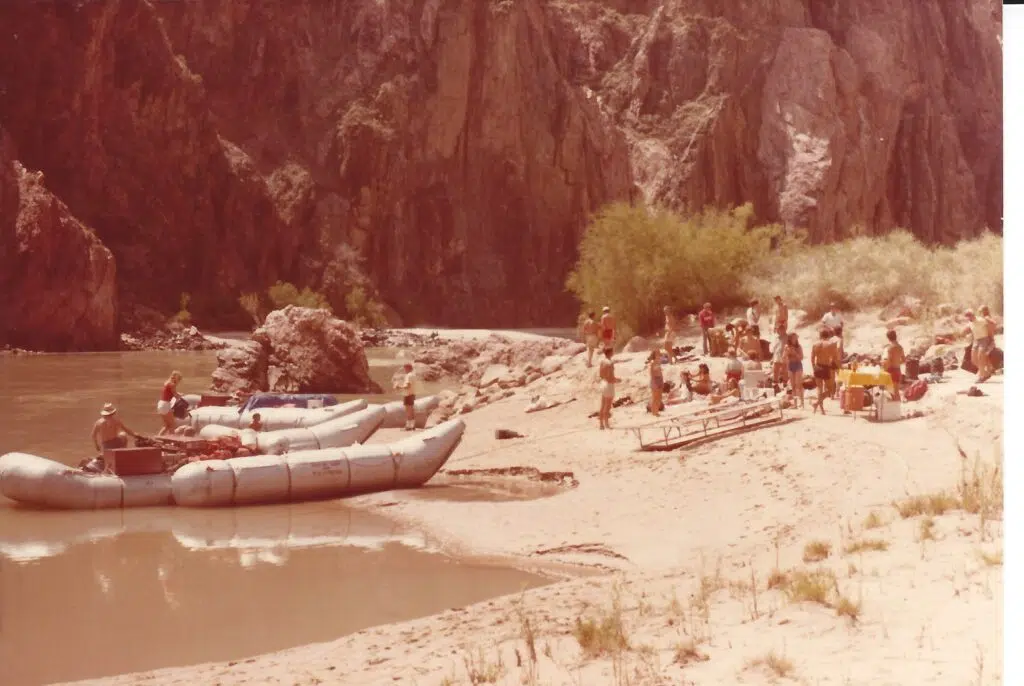
The Salt River Project operates two separate but connected systems. The first is water. SRP delivers water from the Salt and Verde rivers through a network of reservoirs, canals, and recharge basins that serves the core Phoenix metropolitan area. The second is power. SRP generates and delivers electricity to 1 million customers across a 2,900-square-mile service territory.
The water side of the equation is the important story right now.
The Salt and Verde river watersheds drain about 13,000 square miles of central Arizona mountain terrain. Roosevelt, Horse Mesa, Mormon Flat, and Saguaro dams create the Salt River chain. Bartlett and Horseshoe dams hold the Verde. Together these six reservoirs can store approximately 2.9 million acre-feet. That storage is the reason SRP communities weathered the worst years of the Colorado River drought without the mandatory cuts that hit CAP-dependent cities.
But the system has limits. The reservoirs were designed around a water delivery model that assumed gradual, predictable snowmelt from the Mogollon Rim. Climate change is replacing that predictability with what water scientists call flashy storms. Intense, short-duration precipitation events that fill rivers in hours and recede just as fast. The existing reservoirs are too small to capture the full surge of a major atmospheric river event. Water that arrives faster than it can be stored gets released downstream and is lost.
The Bartlett Dam expansion is designed to fix that problem. Raising the dam by approximately 97 feet would add roughly 323,000 acre-feet of new storage capacity. A larger bucket to catch the surge that current infrastructure cannot hold. The Bureau of Reclamation NEPA review is underway. Construction, if approved, extends into the late 2030s.
The SCIF is the SRP-CAP Interconnection Facility. It addresses a different problem. The existing connection between the two systems moves water one direction only, from the higher-elevation CAP canal down into the SRP system. The SCIF creates bidirectional exchange for the first time. When the Salt and Verde run high, SRP can move surplus to CAP customers. When the Colorado is stressed, those customers can return the exchange. The system becomes flexible in ways it has never been before.
I promoted both of these concepts from inside the boardroom. Both are now moving forward. Neither was inevitable.
Find Out More:
- SRP – Climatology Report
- Bureau of Reclamation – Verde Reservoirs Sediment Mitigation Project (Bartlett Dam)
- SRP Watershed Connection – climate and water research
- Central Arizona Project – CAP system overview
- Arizona Water Innovation Initiative – ASU
3. THE NEW WATER ECONOMY
The most significant development in western water in 2026 did not happen at a reservoir or a groundbreaking ceremony. It happened in a boardroom in San Diego.
In late February 2026, the San Diego County Water Authority voted unanimously to pursue interstate water exchanges. The mechanism is straightforward once you understand it. The Carlsbad Desalination Plant produces 50 million gallons of drinking water per day from Pacific Ocean seawater. That local supply allows San Diego to reduce its draw from the Colorado River. The unused Colorado River allocation does not disappear. It moves to Arizona and Nevada on paper, settled through accounting rather than new pipes.
This is what I call the paper water revolution. Water flows through ledgers, not canals.
The Carlsbad plant itself is the proof of concept. It cost $1 billion to build, took 14 years to permit, and produces water at roughly three times the cost of Colorado River imports. San Diego built it anyway. Because expensive, reliable water beats cheap, uncertain water every time you face a drought that does not end. Carlsbad now produces over 100 billion gallons since opening in 2015 and it has never been shut down by a drought.
Arizona is on the other side of this transaction. The Central Arizona Project delivers Colorado River water to Phoenix and Tucson through a 336-mile canal system. Every gallon San Diego stops drawing from the Colorado River is, in theory, a gallon that stays in Lake Mead for Arizona. San Diego’s Water Authority has indicated approximately 50,000 acre-feet of water rights are currently available for interstate exchange.
The financial arithmetic is compelling for both parties. San Diego is paying fixed costs on the Carlsbad plant regardless of output. Selling the resulting Colorado River credit at $2,000 to $3,000 per acre-foot, well below what Arizona will eventually pay for alternatives, generates revenue that reduces ratepayer costs in San Diego while providing Arizona with a supply that does not depend on snowpack.
Arizona’s Water Infrastructure Finance Authority is moving in parallel. In November 2025 it voted to advance four Gulf of California desalination proposals from Acciona-Fengate and EPCOR. All four use the same paper exchange model. Build desal capacity in Baja California to supply Mexican communities, freeing Mexico’s Colorado River treaty allocation for Arizona use. The water never physically crosses the border. Only the accounting does.
The era of cheap water is over. The era of water diplomacy is here.
Find Out More:
- San Diego County Water Authority – Pure Water and water supply portfolio
- Arizona Water Infrastructure Finance Authority (WIFA)
- Poseidon Water – Carlsbad Desalination Plant
- Water Education Foundation – desalination explainer
- ProPublica – Colorado River water trading investigations
4. ENERGY AND WATER
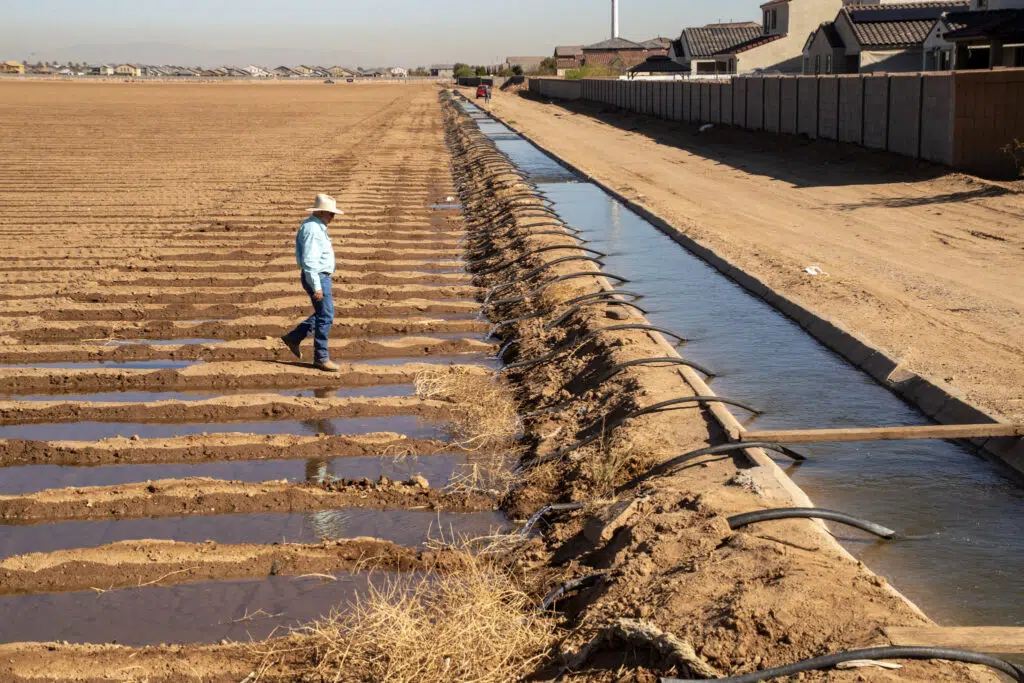
Most people think about energy and water as separate problems. They are not. They are the same problem wearing different hats. And in Arizona, they are converging faster than the planning processes designed to manage them.
Start with electricity. SRP set a summer peak demand record of 8,542 megawatts in 2025. Data centers contributed 5.1% of that peak and are the fastest-growing customer segment on the system. APS has 30,000 megawatts of data center interconnection requests sitting in its queue, enough to power roughly 22 million homes. Arizona’s electricity demand grew 8% in 2025 alone, four times the national average.
None of this growth is driven by population. It is driven by TSMC’s semiconductor fabrication plants, by Meta and Google data centers, by AI training infrastructure that requires massive, continuous power regardless of the weather outside. These loads do not flex with the seasons. They do not conserve in response to public appeals. They run at capacity around the clock.
Now add water. Semiconductor fabrication is among the most water-intensive industrial processes in existence. TSMC’s fabs in north Phoenix require ultra-pure water in enormous volumes. Data centers use water for cooling, some through evaporative cooling towers that consume water directly, others through chilled water systems that are somewhat more efficient. The semiconductor supply chain that Arizona is actively recruiting is also a water supply chain that nobody in the planning documents is fully accounting for.
The hydropower dimension compounds the problem. Hoover Dam’s generating capacity is directly tied to Lake Mead’s elevation. Glen Canyon Dam’s power output depends on Lake Powell. As those reservoirs decline, hydropower output declines with them. The Southwest loses clean, dispatchable generation precisely when the grid most needs it, during summer peak events driven by heat. The replacement power comes from natural gas plants that run hotter and cost more per megawatt-hour.
APS abandoned its 2050 clean energy commitment in August 2025 and announced a new 2,000 megawatt gas plant. That decision will affect ratepayers for 30 to 40 years. It was made against a backdrop of exploding demand from industrial customers whose water and energy needs were not fully included in the original resource planning assumptions.
The decisions being made right now about energy generation, water infrastructure, and industrial recruitment are all connected. The planning processes treat them as separate. That is the institutional gap that produces expensive surprises.
Find Out More:
- SRP – Annual Report and Power Mix data
- U.S. Energy Information Administration – Arizona state energy profile
- Western Resource Advocates – Colorado River and energy nexus
- NRDC – Water-energy nexus research
- Arizona Corporation Commission – utility resource planning filings
5. DEMOGRAPHICS AND GROWTH
Arizona’s growth story has a headline and a footnote. The headline is that Phoenix is booming. The footnote is that the boom depends entirely on people deciding to move here, and that migration is already slowing.
Here is what the data actually shows. Arizona’s total fertility rate hit 1.6 in 2023, down from 2.4 in 2007. The state that once had one of the highest birth rates in the country now has one of the most dramatic fertility declines. Deaths will outnumber births in Arizona by approximately 2029. After that, every net addition to the population comes from in-migration.
That matters because in-migration is sensitive to affordability in a way that birth rates are not. Between 2010 and 2023, Arizona home values increased roughly seven times faster than incomes. Rental household costs rose 23% between 2019 and 2023 while renter incomes rose only 4%. Arizona recorded 106,587 eviction filings in 2024, the highest on record. In 2025, for the first time in recent memory, more Atlas Van Lines customers were leaving Arizona than arriving.
The state is pricing out the demographic that drove its growth.
The geographic picture is even starker. Pinal County is projected to grow 118% over the next 35 years, driven by people priced out of Maricopa County. Meanwhile Apache, Cochise, Gila, La Paz, and Navajo counties are projected to lose population outright. In Mohave and Yavapai counties, deaths already outnumber births. These places are aging in place with shrinking tax bases, declining school enrollments, and water infrastructure built for populations they no longer have.
The dependency ratio, working-age adults supporting retirees, is shifting rapidly. Arizona currently has roughly 17% of residents aged 65 and over. The 85-plus cohort will more than triple by 2055. The healthcare workforce needed to serve that population depends heavily on immigration, precisely when immigration policy is most uncertain.
Water infrastructure is being planned for a state projected to reach 9.8 million people by 2060. That projection assumes migration continues at historical rates. If it does not, if affordability, climate perception, or immigration policy changes the calculus, Arizona may be building reservoirs, canals, and data center substations for a population that never fully materializes.
The math works out only if we are honest about the assumptions behind it.
Find Out More:
- Arizona Office of Economic Opportunity – population projections
- Morrison Institute for Public Policy – Arizona demographics research
- Joint Center for Housing Studies, Harvard – affordability data
- Weldon Cooper Center – state population forecasts
- PRB – U.S. fertility rate research and trends
6. POLICY AND GOVERNANCE
Western water is not governed by physics. It is governed by law. A century of compacts, court decisions, federal statutes, tribal settlements, and interstate agreements collectively known as the Law of the River. Understanding the water crisis means understanding that the fight is as much legal as hydrological.
Start with the 1980 Arizona Groundwater Management Act, probably the most important piece of water legislation in the state’s history and the one that separates Arizona from every state struggling with the Ogallala Aquifer crisis today. The GMA created Active Management Areas covering the most stressed groundwater basins, imposed mandatory conservation requirements, established the 100-year assured water supply doctrine, and created the framework for managed aquifer recharge that Arizona now depends on. It is the reason Phoenix’s per-capita water use has fallen from roughly 260 gallons per day in 1980 to approximately 92 gallons per day in 2023, while the population more than doubled.
Marc Reisner essentially wrote Arizona off in Cadillac Desert in 1986. He was calibrating to a conservation culture that the GMA had not yet had time to change. The GMA is why his most dire predictions did not fully materialize. (Note: Cadillac Desert was a book, and later a 4-part series for PBS-TV)
But the Law of the River at the federal level is a different animal. The Colorado River Compact of 1922 has never been renegotiated. The states have operated under interim guidelines since 2007. Those guidelines expire at the end of 2026. The Bureau of Reclamation released a draft Environmental Impact Statement in January 2026 laying out five alternatives for managing the system going forward. The seven basin states failed to reach consensus. The federal government may impose rules unilaterally.
Tribal water rights add another layer of complexity that is rarely given adequate attention. Roughly 30 tribes hold water rights in the Colorado River basin. Many of those rights remain unquantified, meaning the senior claims of tribal nations to river water have not yet been formally established in the allocation system. As they are quantified and settled, they will compress the water available to states. That process is ongoing and consequential.
Arizona’s Water Infrastructure Finance Authority, created by legislation in 2022 and funded with $1 billion over three years, is the state’s most significant new water governance institution. WIFA has the authority to approve water augmentation projects, issue loans, and enter long-term water purchase agreements. Its November 2025 vote advancing Gulf of California desalination proposals represents the most ambitious use of that authority yet.
Policy is where the physical systems get their marching orders. The decisions being made in 2026 will govern water delivery to the Southwest for the next generation.
Find Out More:
- Arizona Department of Water Resources – Groundwater Management Act overview
- Colorado River Governing Committee – Law of the River documents
- National Conference of State Legislatures – western water law
- Tribal Water Justice – unquantified tribal water rights research
- Arizona Water Infrastructure Finance Authority
- Water Education Foundation – Law of the River explainer
ABOUT KEITH WOODS
Keith Woods is the founder and CEO of KB Woods Public Relations, a Phoenix-based strategic communications firm specializing in regulated industries including water, energy, healthcare, and public policy.
He served on the Salt River Project Board of Directors from 2000 to 2024, a tenure of nearly 25 years that included leadership roles as chairman of the Power, Finance, Facilities, Governance, and Community Relations committees. During that time he helped oversee the retirement of the coal-fired Navajo Generating Station, the addition of 1,000 megawatts of solar and battery storage, and the early policy work that led to the SRP-CAP Interconnection Facility, the Horseshoe Dam sedimentation study, and the analysis behind the current Bartlett Dam expansion project.
Before joining the board, Woods was elected to the SRP Council in 1996. He is a member of the Colorado River Water Users Association and a former member of the National Water Resources Association.
KB Woods has served clients including NASA, PayPal, Cigna, Western Alliance Bank, AAA Arizona, and Phoenix Children’s Hospital Foundation, as well as dozens of municipal, nonprofit, and infrastructure organizations across all 50 states.
Woods writes about western water and energy policy at waterblogged.net and maintains the institutional record of SRP’s water and power decisions at srpexperience.com.